
Hilltop old town or the newer housing below: both cleared, both planned
Llantrisant clears like two separate towns. Up around the Bull Ring the lanes are narrow and steep and parking by the door is rare; down the hill towards Talbot Green you can usually load straight off the drive. Tell us which half you’re in, send a few photos, and we’ll price it, usually the same day.
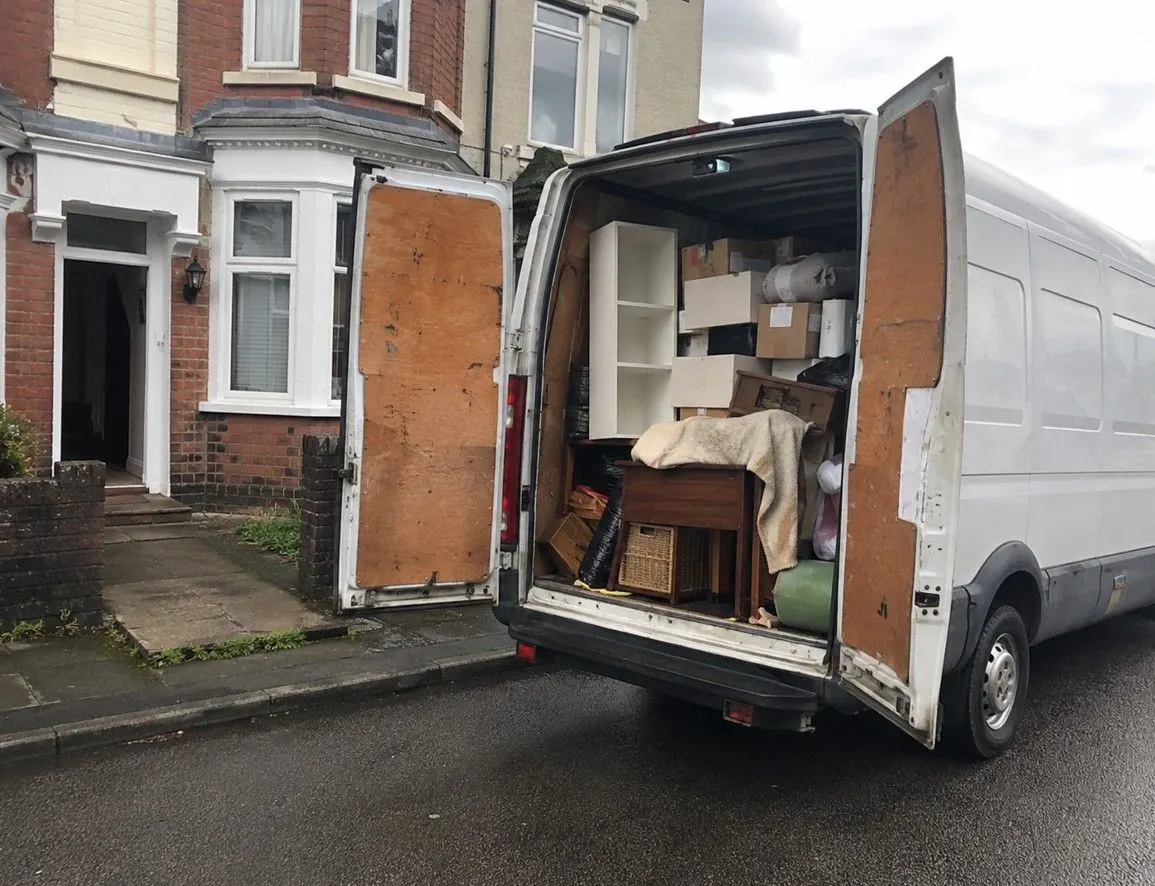
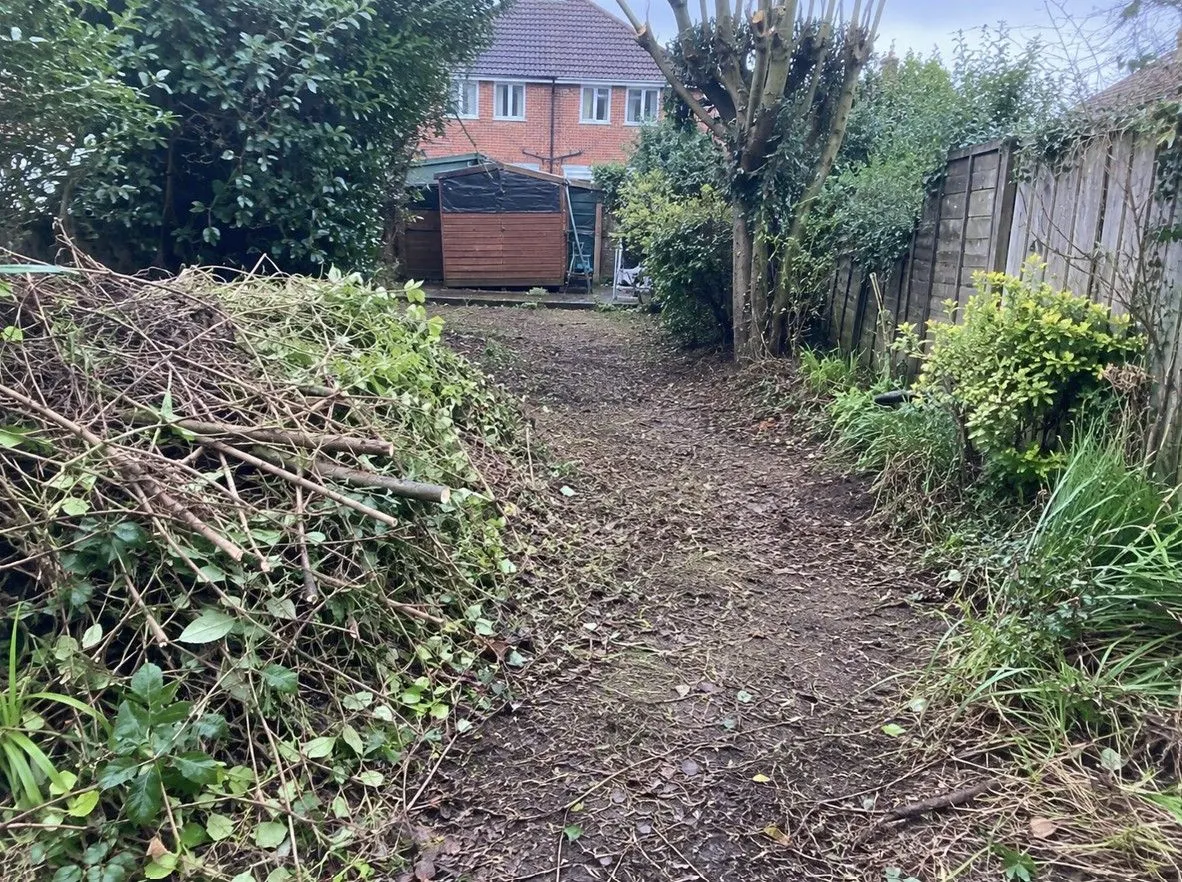
The newer houses running down toward Talbot Green tend to have side gates, so cuttings and old fencing can be wheeled directly to the van.
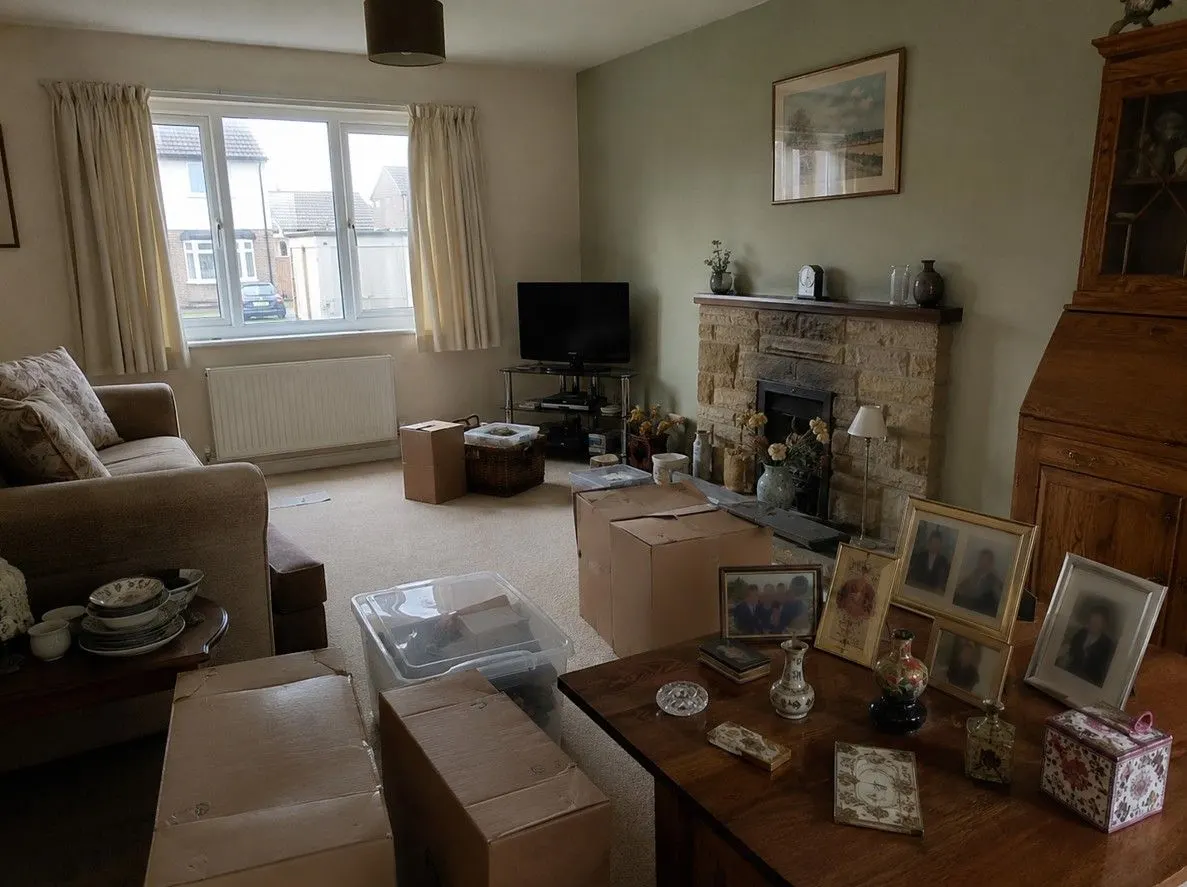
Bereavement clearances come up often in the old town, where a house can stay with one family for a very long time.
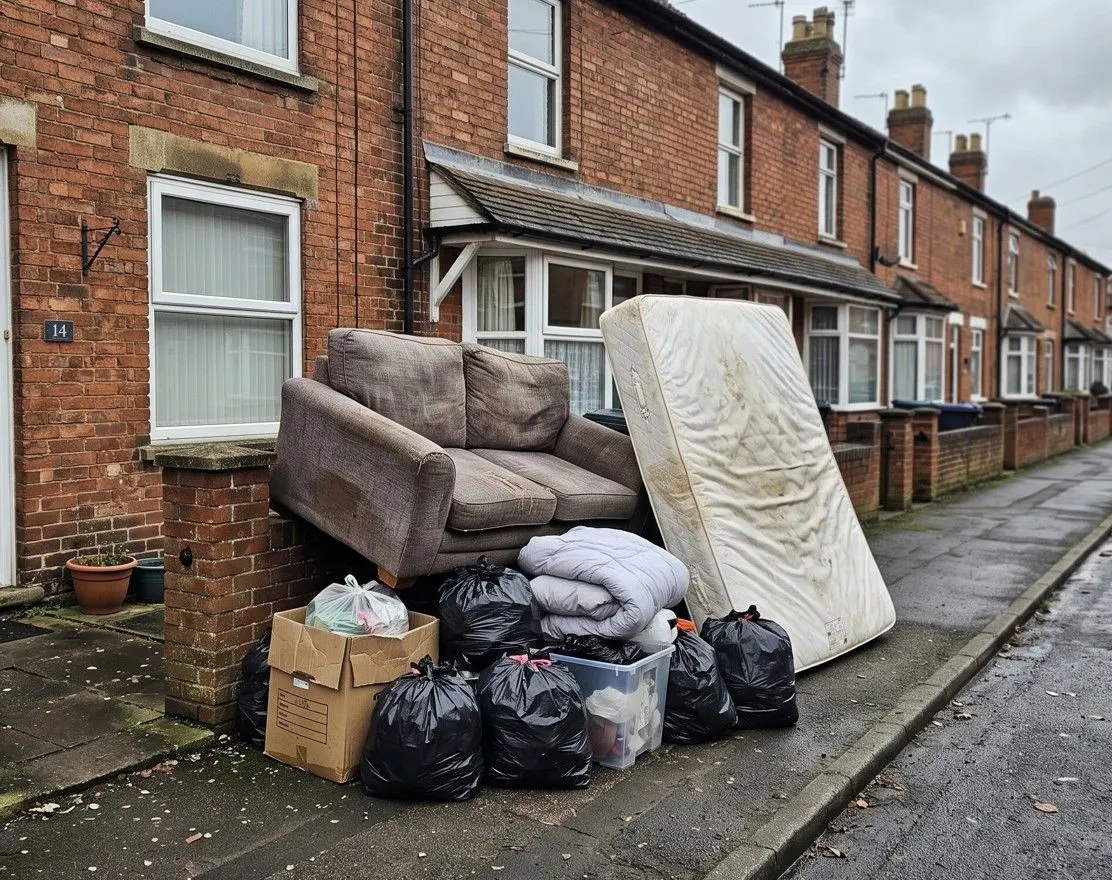
A sofa or mattress from a hilltop cottage is carried down to wherever the van can safely stop.
Llantrisant is really two places sharing a name. On the hilltop is the medieval old town: narrow streets, stone cottages and period houses gathered around the Bull Ring and what remains of the castle, among them some of the county’s oldest surviving houses. Below it, a large spread of modern housing runs down toward Talbot Green and out in the direction of Beddau.
From our side, the difference is mostly about getting in and out. Old-town houses were built long before anyone parked a van outside, so the carry from door to vehicle can be longer than the size of the property suggests. On the estates below, drives and side access make loading quick, which usually shows in the price. A street name tells us which kind of job we’re looking at.
The old town is among the more demanding places we work, and it’s better to say so up front. Turning room on the narrow streets is minimal, the approaches climb steeply, and stopping near the door is sometimes impossible. Some buildings are listed or sit inside the conservation area.
We plan these jobs before the day. That can mean a smaller vehicle doing more runs when it works out quicker overall, and timing the visit to miss the worst of the congestion. On period houses, original doors, fireplaces and ironmongery are flagged as possible salvage instead of going in the van, and any fixed feature that might need consent to remove stays put until RCT’s conservation team or your architect has confirmed it can go.
Down the hill the job changes completely. Estate homes here come with drives and side gates, so the van can sit on the property and load directly. What’s inside differs too: lofts are smaller, there are no cellars, more of the furniture is fitted, appliances are often integrated, and most of the stored clutter lives in the garage rather than being spread around the house. Fitted wardrobes and built-in appliances take longer to remove than freestanding pieces because each has to be unscrewed or disconnected where it stands, so point them out when you send photos.
Llantrisant comes under Rhondda Cynon Taf Council, not Cardiff, and the council’s own community recycling centre is close by on Llantrisant Industrial Estate. Proof of RCT residency is needed, waste has to be sorted into types before you arrive, and a van full of mixed waste will be turned away. Anyone taking a van needs a permit for every visit, booked ahead by phone on a weekday, with a cap of three van visits a week and one a day.
For kerbside pickups, RCT charges £24 for up to three items. They go out between 7pm the night before and 7am on the day, anything not on the booking stays where it is, and the fee isn’t refundable. That suits a couple of large pieces. It won’t help much with an old-town house where everything has to come down a steep lane, or with a sale or probate deadline.
We know both ends of Llantrisant: the lanes where a carry has to be planned and the estates where the van backs onto the drive. We’re a Cardiff-based team of registered waste carriers, rated 5.0 on Google and working 7am to 9pm every day. Furniture goes to charity, reuse, auction or salvage where it can, recycling comes next, and nothing is ever fly-tipped.
Correspondence address: 38 Lewis Rd, Llandough, Penarth, Cardiff CF64 2LW